
How Markerless Motion Capture Works
Traditional optical capture works by tracking reflective markers placed on a subject or object. Markerless removes the markers, and the cameras find those landmarks themselves through machine learning.
Multi-view Capture
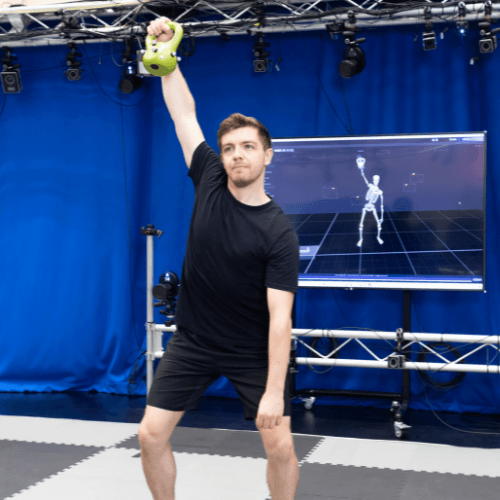
Several synchronized cameras observe the volume from different angles, so that a limb hidden from one camera remains visible to others.
Keypoint detection
Machine-learning models trained on curated human motion-capture data identify anatomical keypoints, including joints, limb segments, and body orientation, in every camera view, frame by frame.
Solving
A proprietary solver reconciles detections from all cameras into a single three-dimensional skeleton, resolving occlusion and holding subject identity when more than one person is in the volume.
Real-time review and export
Solved motion is available live, so what appears on screen during capture matches the data being recorded. Sessions can be reviewed immediately and exported to downstream tools already in use, with a suite of manual and automated data-cleaning tools available prior to export.
Where Can Markerless Motion Capture Be Used?
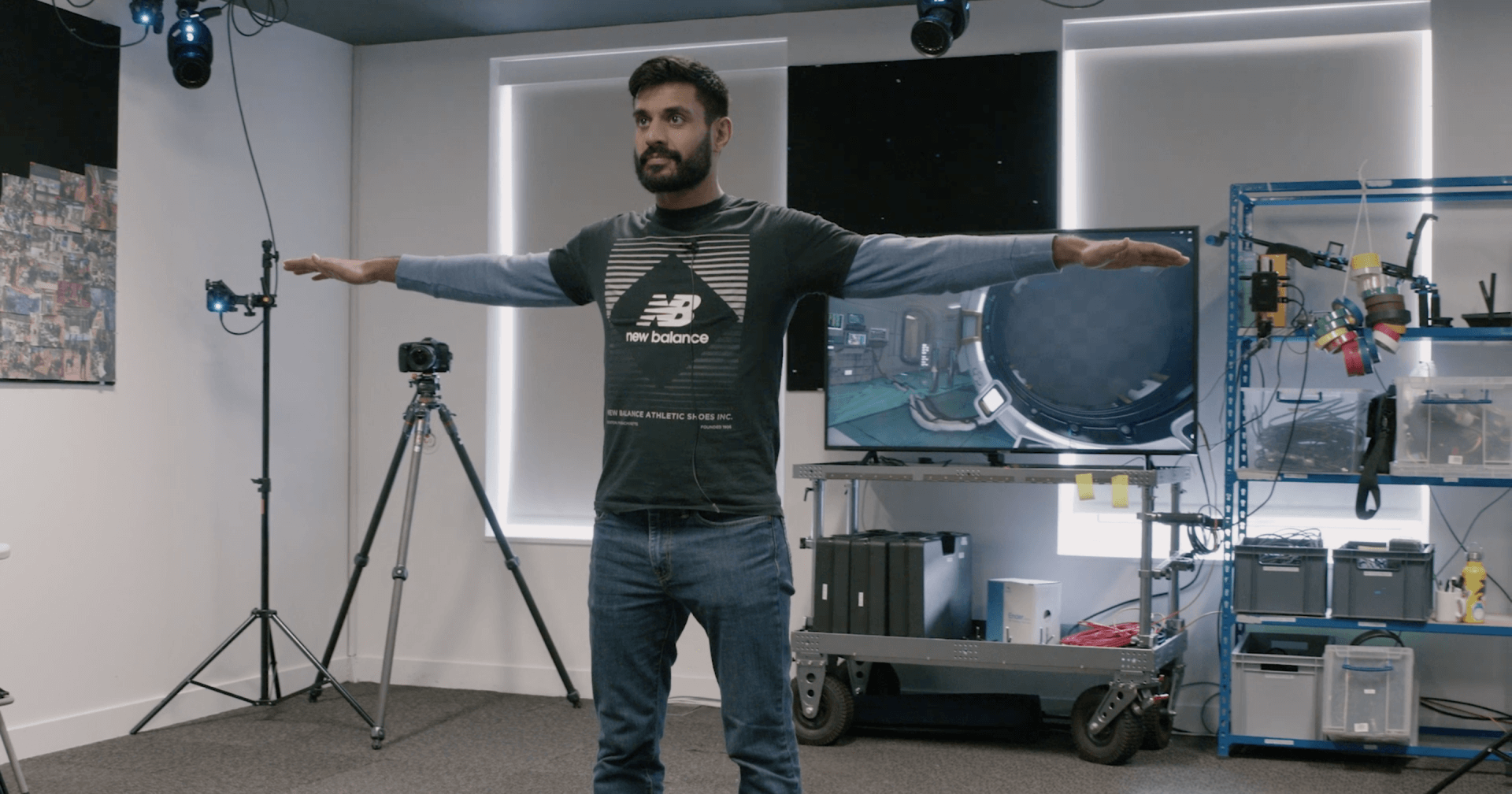
Markerless Motion Capture For Entertainment
In games, film, episodic TV, virtual production, and live performance, markerless capture changes what is possible early in a production. Performers work in their own clothing, directors can explore during rehearsal, and ideas can be tested in the volume before anyone commits to a full shoot. Unmarked performers and marked props can be captured together in one environment.
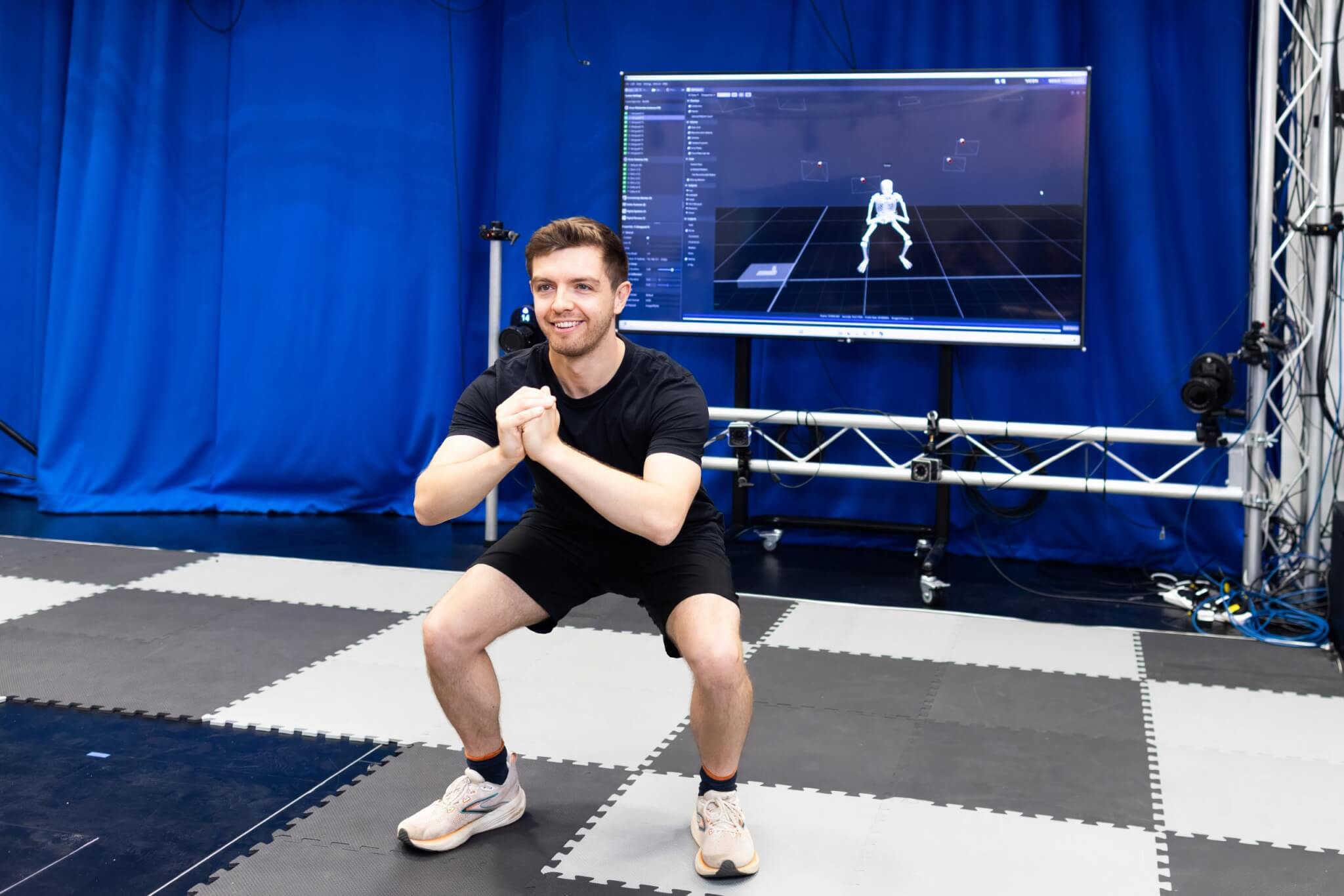
Markerless Motion Capture For Life Sciences
In biomechanics, sports science, and movement research, removing marker placement removes the longest and most variable step in data collection. Sessions become shorter, more participants can be seen in each period, and people can be captured in their normal environment. Markerless data sits alongside the optical and inertial data already collected in the same Vicon ecosystem, so methods can be compared rather than replaced.
Markerless and Marker-Based Capture, Together
Markerless capture is not a replacement for marker-based capture. The two resolve different things, and in many instances, would use both for optimal accuracy and speed of capture
Marker-based optical capture remains the method of choice where fine detail and accuracy are required, such as hands, close contact between subjects, small segments, and any measurement where the definition of an anatomical landmark matters. Markerless capture covers ground quickly, with almost no preparation, and keeps people moving naturally.
Vicon markerless runs on the same ecosystem as Vicon optical: shared calibration, shared capture environment, shared data pipeline. Unmarked people and marked objects can be captured in a single coordinate space, making hybrid capture a single session rather than two.
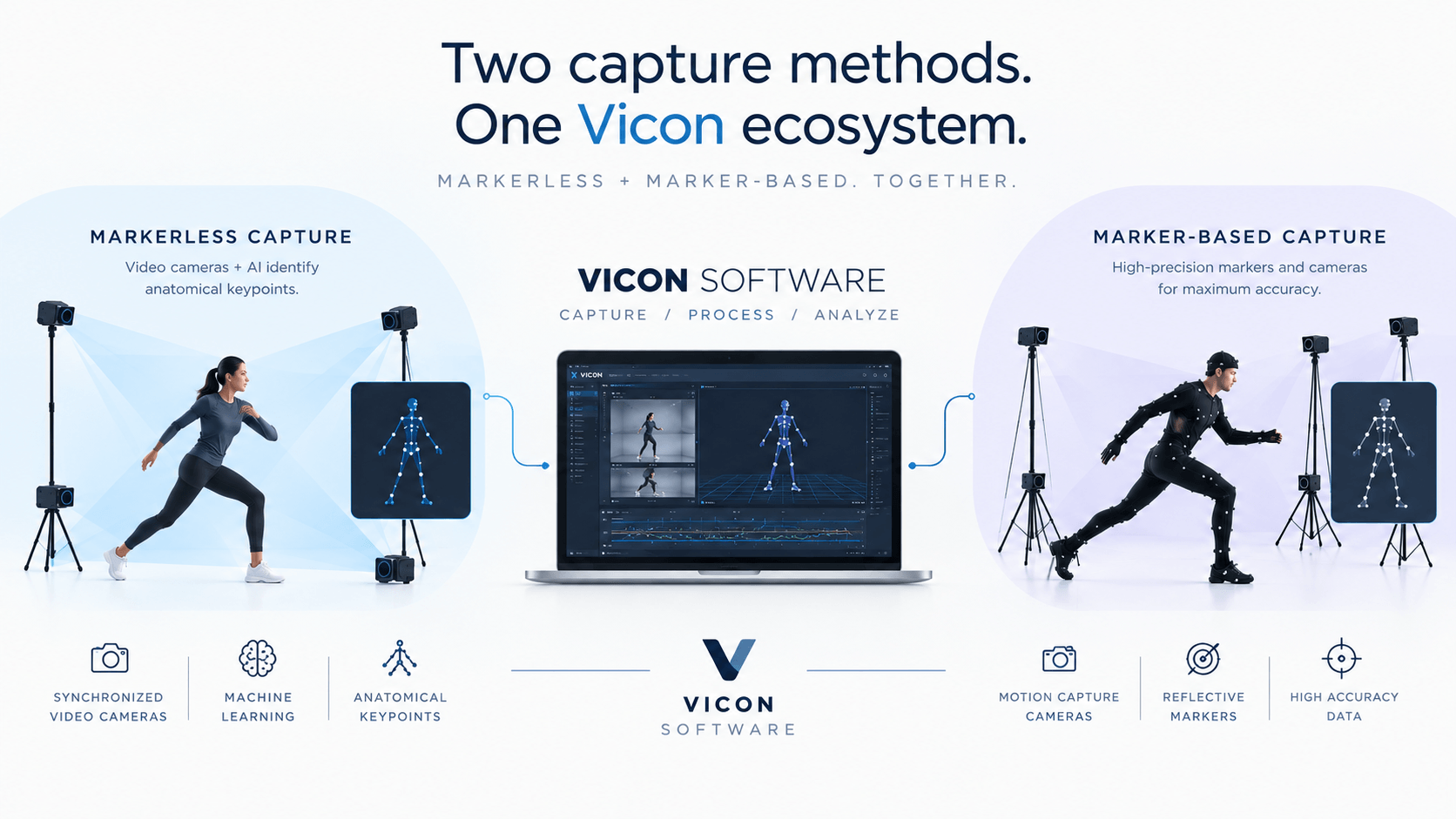
The Vicon Markerless System At A Glance

Vicon Vanguard Cameras
Purpose-built cameras for markerless motion capture, designed around the needs of machine-learning computer vision, and fully compatible with supported Vicon optical systems.
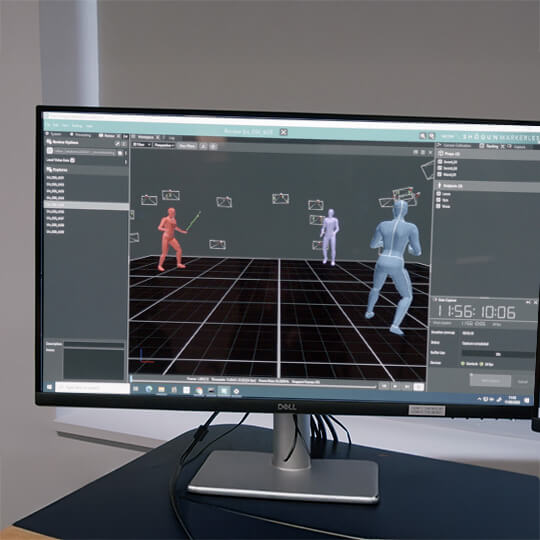
Shōgun Markerless
Shōgun Markerless adds markerless capture to Vicon Shōgun. Use it on its own, or combine it with marker-based capture for a hybrid workflow.
Nexus Markerless
Markerless capture for life sciences, delivered as an add-on to Vicon Nexus. Nexus Markerless requires a Vicon Nexus license; it extends the Nexus ecosystem rather than operating independently. Coming soon!
Why Vicon for Markerless Mocap
Built on Forty Years of Measurement
Vicon has been building motion capture systems since 1984, across life sciences, entertainment and engineering.
One ecosystem, not two
Markerless and optical share calibration, capture environment and data pipeline.
Hybrid motion capture.
Markerless systems work alongside optical, offering optimal speed to capture as well as the highest level of detail and accuracy.
Supported globally
Systems are specified by solution engineers and backed by an experienced support team.
Markerless Motion Capture: Frequently Asked Questions
What is markerless motion capture?
Markerless motion capture is a method of recording human movement using synchronized video cameras and machine-learning software, without the subject wearing any markers. Computer vision models identify anatomical keypoints in each camera view, and a solver combines them into a three-dimensional skeleton. It is also referred to as markerless mocap.
How does markerless mocap work?
Several calibrated cameras view the capture volume from different angles. Machine-learning models trained on human motion data detect joints and limb positions in every view, frame by frame. A solver reconciles those detections into a single 3D skeleton, resolving occlusion and maintaining subject identity when more than one person is present. The solved motion is available in real time.
What is the difference between markerless and marker-based motion capture?
Marker-based systems track reflective markers placed at anatomical landmarks on the subject; markerless systems track the person directly from video. Marker-based capture requires marker placement, suit fitting, and labeling before capture begins, and resolves fine detail such as hands and close contact. Markerless capture requires no subject preparation and is faster to set up. Both produce three-dimensional motion data, and many systems use the two together.
What equipment do you need for markerless motion capture?
A markerless system requires multiple synchronized cameras positioned around the capture volume, a workstation to run the solving software and markerless capture software, and a space with stable, even lighting. Vicon markerless systems use Vanguard cameras with either Shōgun Markerless or Nexus Markerless.
Can markerless and marker-based motion capture be used together?
Yes. Vicon markerless is compatible with supported Vicon optical systems and shares the same calibration and data pipeline, so unmarked people and marked objects can be captured in a single coordinate space within one session. This is often described as hybrid capture.
What is markerless motion capture used for?
Markerless mocap is used wherever setup time or subject comfort is a constraint. In entertainment that includes previsualisation, rapid iteration, virtual production, and live performance. In the life sciences, it includes biomechanics, sports science, and movement research, particularly when higher participant throughput or natural clothing is important to the study design.